



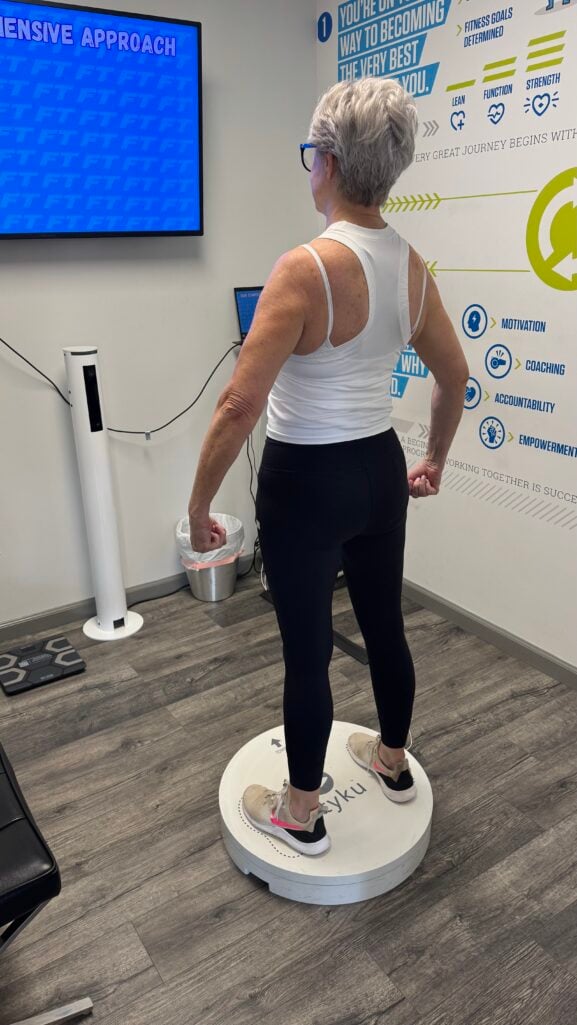
I was standing in the consult room at Fitness Together a few days ago, waiting for my trainer to pull up my scan results, and I had one of those small, clarifying moments — the kind that sneaks up on you at 67 in a way it never did at 37. The number on the report wasn’t the thing that mattered. What mattered was the sentence underneath it: lower body fat than 90% of women my age. And I thought — well. Isn’t that something to build on, rather than something to fix?
So here’s where I am, Grit & Glammers, in full transparency: I’d love to lose ten pounds. I’ll say that plainly, because I think there’s something almost radical in a woman my age admitting she still has a vanity goal without apologizing for it six different ways. But the ten pounds isn’t really the goal. The goal — the actual, underneath-it-all goal — is to age well. To be the woman who can still carry her own suitcase up the stairs at eighty, who can get down on the floor to play with her grandchildren and get back up again without a production number about it. Strong, not small. That’s the shift.
Key Takeaways: I’d love to lose ten pounds — I’ll say that plainly. But at 67, the real goal is aging well, not a number on a scale. A DEXA scan last year showed early signs of osteopenia, which is what finally pushed me to commit to real strength training instead of the one session a week I’d been squeezing in. I’ve worked out most of my adult life, but this time I wanted in-person accountability and real community, not another solo routine I’d quietly abandon — so my weekly plan is built almost entirely around strength training with other people in the room: personal training twice a week, Orange Theory once a week, Pilates three times, plus separate cardio, all backed by a protein-forward nutrition plan targeting 170g protein, 170g carbs, and 38g fat a day. Preserving lean muscle mass matters more after 50 than losing fat for its own sake, because muscle is what keeps us independent, mobile, and capable for decades to come.
The Scan That Got My Attention
Here’s the honest part. I had a DEXA scan done last year, and it came back showing early signs of osteopenia — the stage before osteoporosis, where bone density starts to thin. It wasn’t a crisis. But it was a very clear tap on the shoulder, the kind of thing that gets your attention at 67 in a way it might not have at 47. Ever since that scan, I’ve known I needed to increase my strength training. And then — guess what? I didn’t. Life happened, the calendar filled up, and I kept doing exactly one strength session a week for months, telling myself it was enough. It wasn’t, and I knew it wasn’t. So this is me, publicly, putting it in gear.
That’s part of why the DEXA scan matters here — bone density and muscle mass are closely linked, and resistance training is one of the few things that meaningfully protects both as we age.
My Weekly Workout Split
Here’s the other thing I knew about myself going in: I did not want to do this alone. I’ve tried the solo-workout-video-in-my-living-room approach before, and I know exactly how that story ends — with good intentions and a yoga mat gathering dust by February. What I wanted this time was in-person accountability and real community — people who notice when I show up, and people I don’t want to disappoint by not showing up. I’ve worked out in some form for most of my adult life, so this isn’t about starting from zero. It’s about who’s standing next to me while I do it. So I built a week that would have sounded exhausting to me a decade ago and now just feels like the structure I didn’t know I was missing:
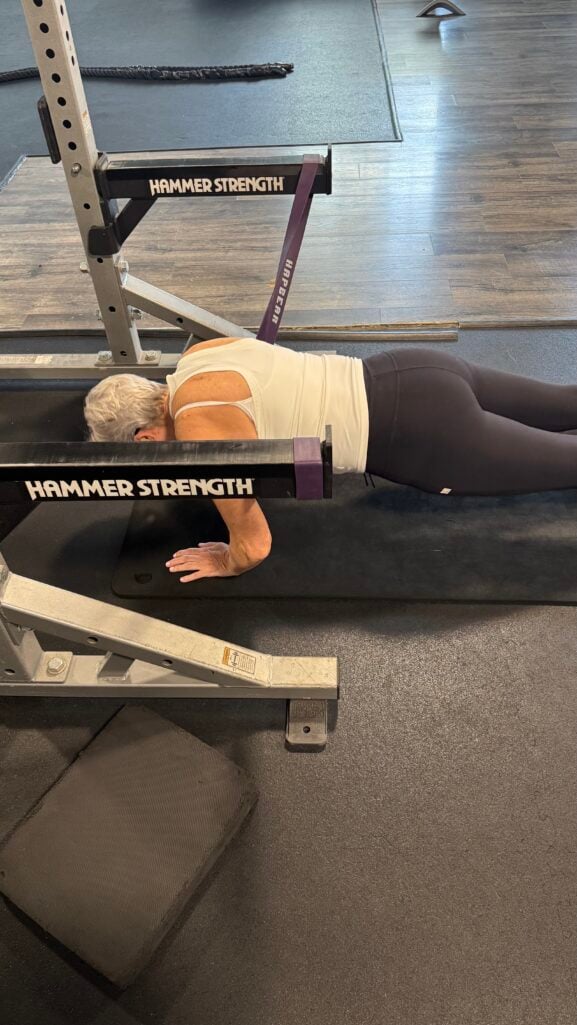
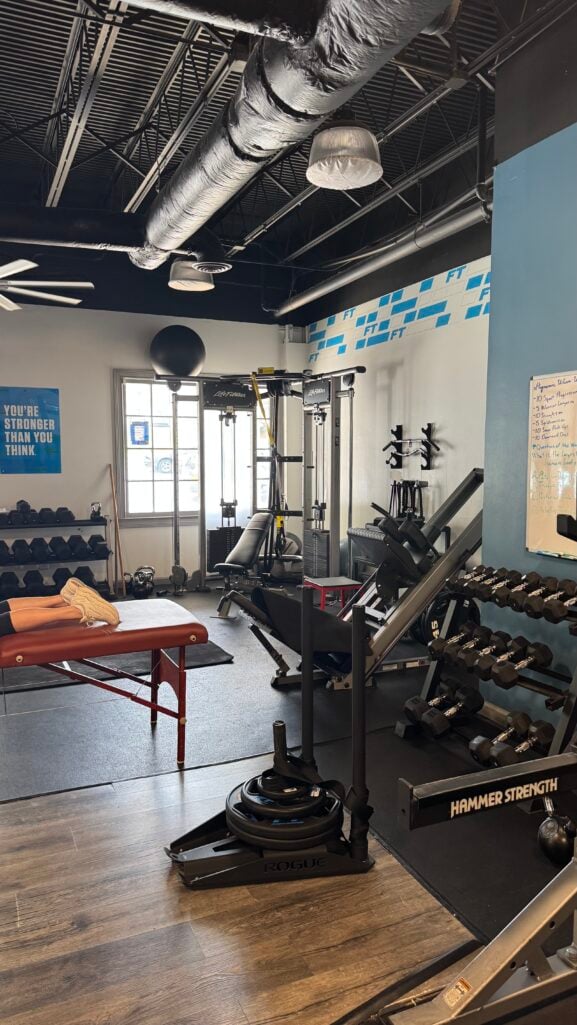
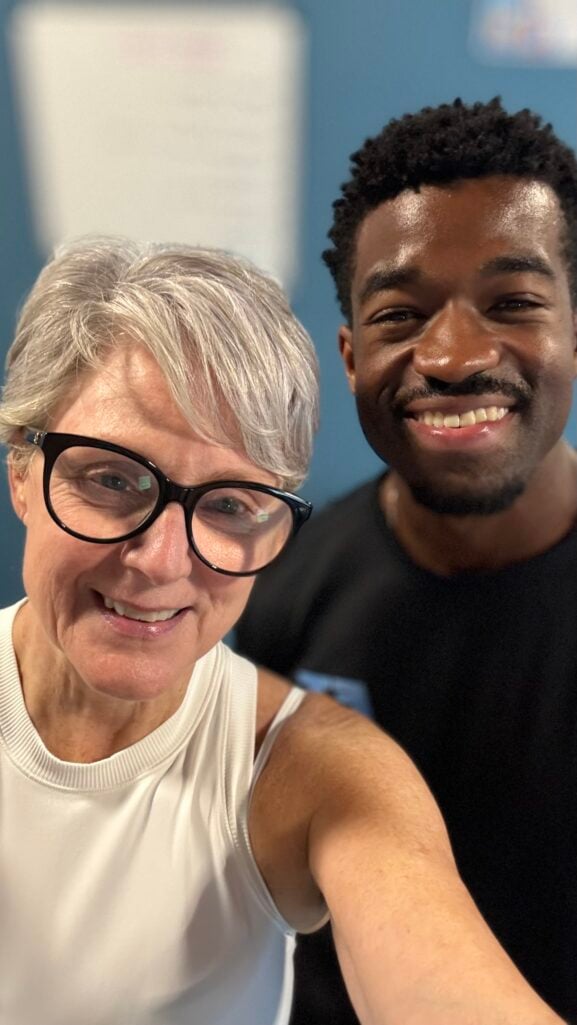
- Personal training, twice a week — at Fitness Together, working specifically on strength and lean mass preservation, not just “toning.” There is nothing like a trainer who hands you a dumbbell you’d never reach for on your own and asks for two more reps when you wanted to quit five before.
- Orange Theory, once a week — real strength training, not just cardio, plus the community energy of a room full of people working hard together.
- Pilates, three times a week — for posture, core, and the kind of long, elegant strength that actually shows up in how clothes fit.
- Cardio woven in separately around all of it, because heart health doesn’t take a decade off just because everything else did.
Why Strength Training Matters More Than Cardio After 50
If there’s one thing I want you to take from this post, it’s this: strength training is not optional after 50. We lose muscle mass steadily as we age — a process called sarcopenia — and it’s quietly one of the biggest threats to independence and vitality in the decades ahead. According to Mayo Clinic, that progressive muscle loss underlies the falls, the loss of independence, and the frailty we associate with aging — and it’s largely preventable with consistent resistance training. Every session with weights is a deposit in an account I’ll be drawing from at 75, at 85. Cardio keeps your heart young. Strength training keeps you young — able-bodied, capable, upright.
The Numbers Behind the Plan
I had my Styku 3D body scan done this past Friday, and I have to say — it’s genuinely impressive what technology can do these days. I now have an actual 3D photo of exactly what I look like today, which is going to be enormously helpful as this training unfolds week by week. Rather than fixating on the scale, I’m tracking the things that actually tell the story of what’s happening under the surface:
- Body fat percentage: 33.4%, which lands in the “Fit” category — and lower than 90% of women in my age bracket
- Lean mass: 63.3% of my total body composition. This is the number I actually care about most right now, because muscle is metabolically active tissue, and preserving it is the whole ballgame
- Visceral fat area: 97.1 cm², rated “Low Risk.” This is the fat that sits around the organs rather than under the skin, and it matters far more for long-term health than anything visible in a mirror
- Appendicular Lean Soft Tissue Index: rated “Not At-Risk,” which is the scan’s technical way of confirming I still have solid, functional muscle mass specifically in my arms and legs — an important marker as we age, since that’s the muscle we rely on for everyday strength
- Overall Shape Score: 92 out of 100, rated “Excellent”
- Resting metabolic rate (BMR): 1,347 calories a day — the baseline my body burns before I move a muscle, and the actual number my nutrition plan is built around
I’m not chasing a number on a scale. I’m chasing a body that functions beautifully for as long as possible — and that means eating and training in a way that protects muscle, not just burns calories.
Why Nutrition Matters Just as Much as Exercise
Here’s something I had to fully accept before any of this worked: you cannot out-train a bad plate. I could show up to Fitness Together, Orange Theory, and Pilates every single week and still lose the muscle I’m working so hard to build if my nutrition doesn’t back it up. Exercise gives your body the signal to build and preserve muscle. Food gives it the actual materials to do it. Skip one, and the other only gets you halfway there.
That’s why my BMR of 1,347 calories became the anchor for everything else. It’s the floor — what my body needs just to run its basic functions — and my plan is built up from there, not down from some arbitrary restrictive number. On top of that floor sits my macro target: 170 grams of protein, 170 grams of carbohydrates, and 38 grams of fat a day.
The protein number is the one that surprised me most. Research on women over 50 consistently points the same direction — Stanford Lifestyle Medicine notes that active women over 50 often need 1.2 to 1.6 grams of protein per kilogram of body weight, roughly double the standard federal recommendation, to protect against age-related muscle loss. Most of us drastically under-eat protein right when our bodies need it most to hold onto lean mass.
There’s also real research on why the two have to work together. A study on postmenopausal women found that pairing a moderately high-protein diet with structured exercise preserved significantly more lean mass than either the diet or the training alone — the combination is what moved the needle, not one piece in isolation. That tracks exactly with what I’m feeling four weeks in: the workouts build the demand, and the protein meets it.
Carbs and fat matter here too, even though protein gets all the glory in these conversations. The 170 grams of carbohydrates fuel the actual training — you cannot ask your body to lift, spin, and flow through Pilates on empty, and under-fueling around workouts is one of the fastest ways to sabotage the very muscle you’re trying to protect. The fat supports hormone function, which becomes even more important post-menopause, not less. It’s meant a real rethink of how I build a plate — protein first, then working the carbs and fat around it — and I’ll be sharing more of the practical, real-meals version of that in the weeks ahead.
This is also why my trainer isn’t just handing me a workout plan and waving goodbye. He’s involved in the nutrition side too, which has made all the difference. I log every calorie and every macro, every day, in MyFitnessPal, and he follows along and checks in on it — so if the protein target slips for a few days, or the carbs dip too low around a hard training week, someone actually notices before it becomes a pattern. Accountability isn’t just about showing up to a class. It’s knowing someone is going to ask how the week actually went, on the plate as much as in the gym.
What I’m Wearing to Do It In
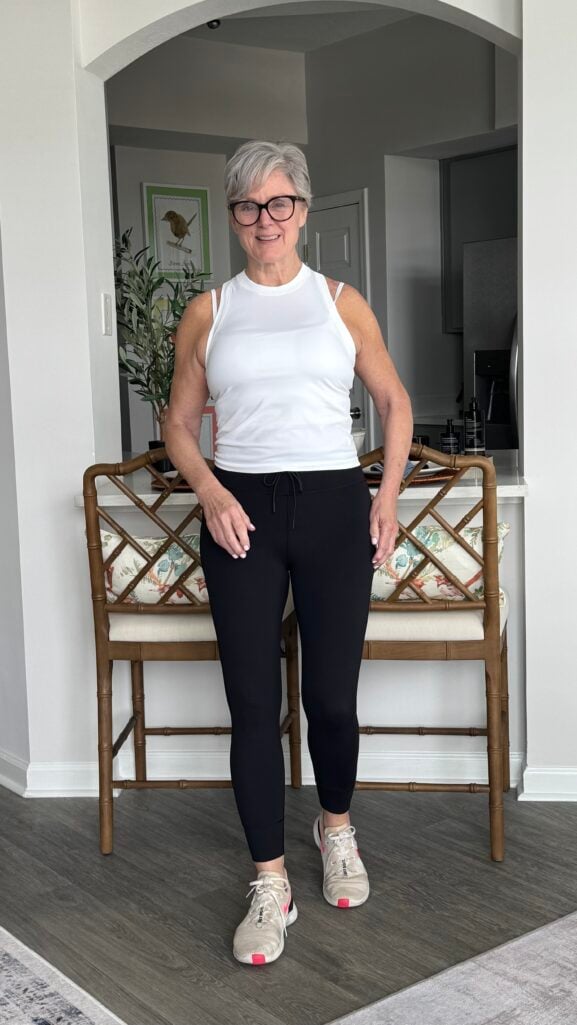
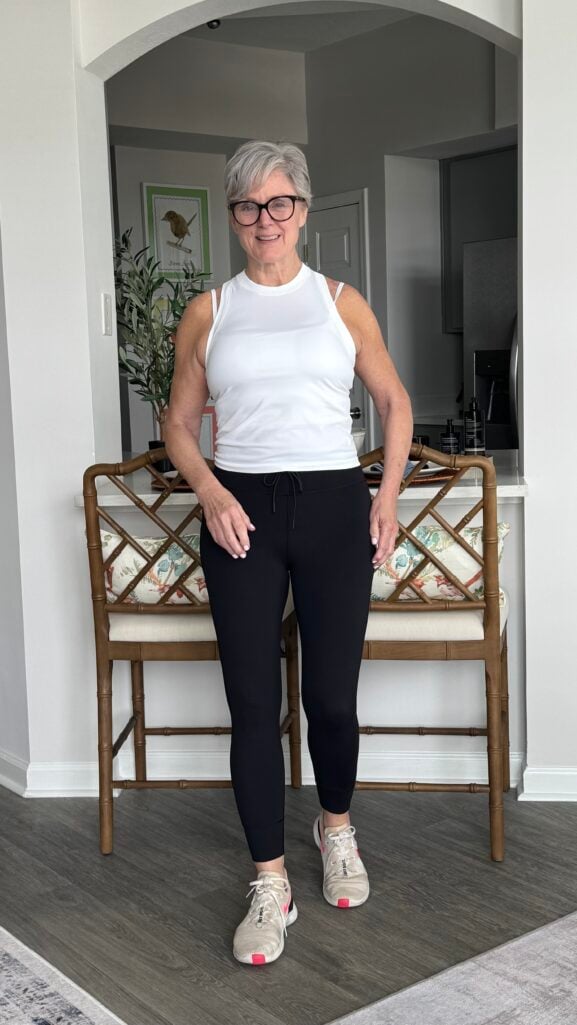
Because if I’m going to be in leggings three or four days a week, I’m going to feel put-together in them. And I’ll say it — there’s nothing better than new workout clothes and a new fitness routine. It’s a small thing, but showing up in gear that actually fits and feels good is its own kind of motivation. Here’s the workout uniform in rotation right now, broken out by what I’m actually doing that day, along with the pieces I layer on top when I’m running errands straight from the studio.
On strength training days, I’m living in the Athleta 7/8 Leggings in Navy paired with either the Athleta Recharge Racerback Tank or the Athleta Trainknit Tank — both give me the range of motion I need for the dumbbell work without riding up mid-set — and the Nike Metcon Training Shoe on my feet, because a proper training shoe with a stable, flat sole makes a real difference once you’re loading weight. Pilates days call for something a little softer: the Beyond Yoga High Waist Leggings, the Slim Racerback Sports Bra, and the Featherweight Tank layered over it, with the Pembroke Knit Cardigan thrown on for the walk in and out of the studio. And on days I just need a reliable rotation, it’s the Daily Layered Crop Tank Top, 7/8 Daily Leggings, and Energy Racerback Tank on repeat.
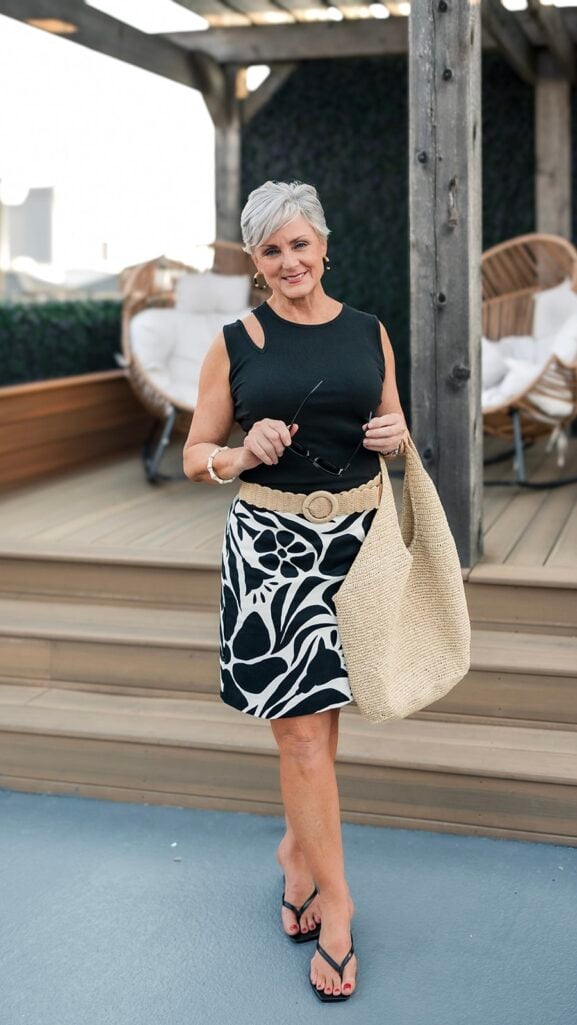
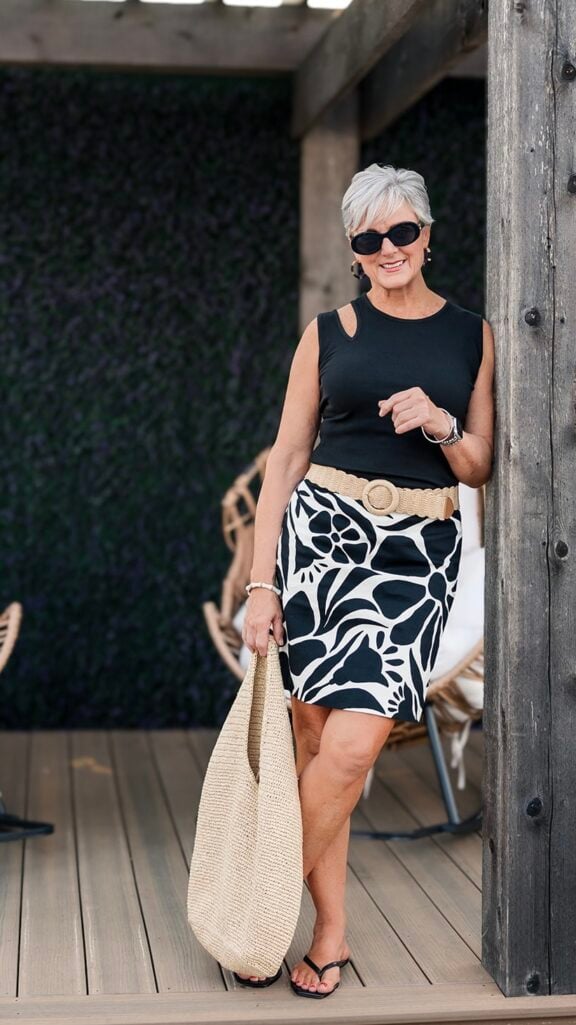
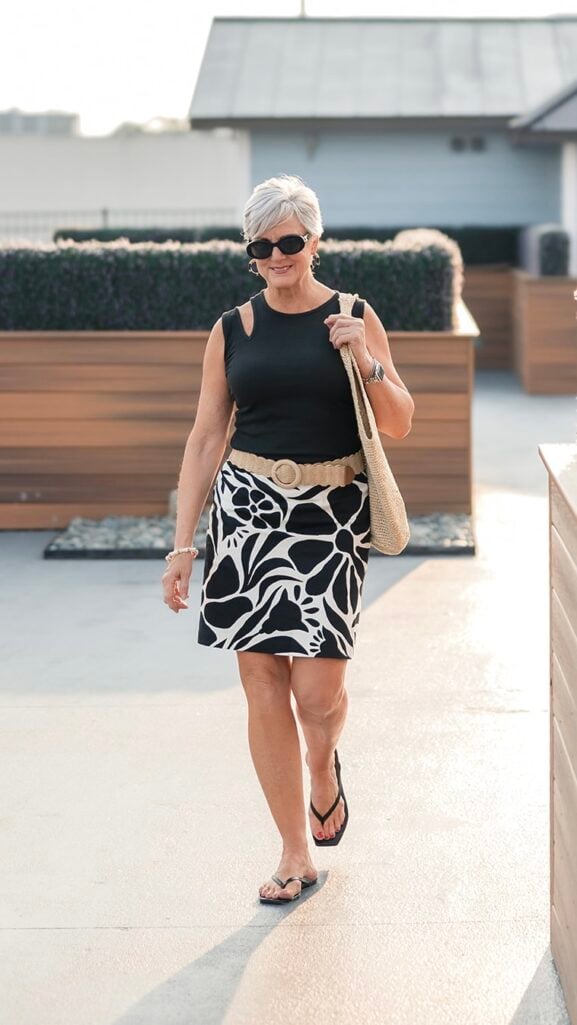
Then there’s what happens after — because Atlanta in July doesn’t care that I just left the gym, and I’m not walking into a hot parking lot and running errands still dripping in Lycra. My go-to for a hot summer day is the Canvas A-Line Skirt thrown over the Similar Black Tee, cinched with the Stretch Straw Belt so it doesn’t look like an afterthought, and finished with the Black Thong Sandals — nothing on my feet that requires effort in this heat. I sling the Straw Tote over one shoulder, add the Wrapped Hoop Earrings and Bamboo Bangle, and slide on the Triomphe Sunglasses — five minutes, and I look like I planned it, not like I’m still in recovery from a workout.
SHOP THE LOOK
FAQ: Losing Weight After 50
Why is strength training more important than cardio after 50?
Strength training directly counteracts sarcopenia, the age-related loss of muscle mass, while cardio alone doesn’t. Preserving muscle protects mobility, metabolism, and independence — cardio supports heart health, but muscle is what keeps you functional long-term.
How much protein should women over 50 eat to lose weight?
Research suggests active women over 50 often need 1.2 to 1.6 grams of protein per kilogram of body weight daily — well above the standard RDA — to protect lean mass while in a calorie deficit. My own target is 170 grams a day.
Can you lose weight after 50 without losing muscle?
Yes, but it requires a deliberate approach: adequate protein, consistent resistance training, and a moderate rather than aggressive calorie deficit. Losing weight without prioritizing muscle often means losing strength along with the pounds.
What does a realistic weekly workout schedule look like after 50?
Mine currently includes two personal training sessions, one Orange Theory class (also strength-focused), three Pilates sessions, and separate cardio. The specific mix matters less than consistency and making sure real strength work shows up every week.
Can strength training help with osteopenia?
Yes — weight-bearing and resistance exercise are among the most effective non-medical ways to support bone density and slow the progression from osteopenia toward osteoporosis. If a DEXA scan has flagged early bone loss, that’s a strong signal to prioritize consistent strength training, not just cardio.
Is nutrition or exercise more important for weight loss after 50?
Neither works well without the other. Exercise, especially strength training, signals your body to build and preserve muscle — but without adequate protein and overall nutrition, that signal has nothing to work with. Research shows pairing a protein-forward diet with structured exercise preserves significantly more lean mass than either alone.
Is it okay to still want to lose weight after 50?
Yes. Wanting to look and feel a certain way doesn’t need justification at any age. The healthiest approach is holding that goal alongside a deeper one — like aging well — so the number on the scale isn’t the only measure of success.
Closing Thoughts
So that’s the real picture — not a before-and-after, not a finish line, just where I am four days into taking this seriously. A DEXA scan that got my attention, a trainer who’s in on both the workouts and the plate, a scan from last Friday that gives me an honest starting point, and a community of people I show up for.
I’m going to check back in with you once a month with an honest update — the wins, the weeks that don’t go as planned, whatever the scan and the scale and how my clothes fit are actually telling me. No filters, no highlight reel. Just the real, ongoing story of what it looks like to build strength after 50, one month at a time.
Let’s Talk
What’s your relationship with the scale after 50 — has it shifted the way mine has? Tell me in the comments.
And if this kind of honest, no-fluff conversation about aging well is your thing, sign up for the newsletter for more of it every week — plus the workout looks, the recipes, and the pieces I’m actually wearing to do all of this in.
SHOP THE POST
Strength Training Days
- Athleta 7/8 Leggings in Navy
- Athleta Recharge Racerback Tank
- Athleta Trainknit Tank
- Nike Metcon Training Shoe
Pilates Days
- Beyond Yoga High Waist Leggings
- Slim Racerback Sports Bra
- Featherweight Tank
- Pembroke Knit Cardigan — for the walk in and out of the studio



LEAVE A COMMENT